The Off-Grid Connection Challenge
Deploying security cameras, IoT sensors, or wireless bridges in remote locations (like parking lots, farms, construction sites, or trailers) is historically a nightmare. Traditional setups require running hundreds of feet of high-voltage cabling or configuring complex custom solar boxes with separate chargers, battery protectors, and switches.
Linovision solves this by building rugged, intelligent hardware that integrates power management and networking into a single unit. Whether it's stepping up 12V RV battery power to run 48V PoE cameras, or running an entire surveillance setup off a solar panel, their gear is built to simplify remote connectivity.
Core Technologies Demystified
1. Integrated MPPT Solar Charge Controllers
Traditional solar setups use PWM (Pulse Width Modulation) controllers, which simply clip the voltage of solar panels to match the battery. Linovision uses high-efficiency MPPT (Maximum Power Point Tracking) controllers built directly into their PoE switches. MPPT continuously calculates the optimal voltage and current to squeeze up to 30% more power from the same solar panels, which is crucial during cloudy winter days.
2. DC-to-DC Voltage Boosting
Standard IP cameras require 48V PoE power to operate. However, solar battery banks, RVs, and boats usually run on 12V or 24V DC. Standard networking gear requires you to run an inverter to convert DC to AC, and then plug in a power adapter to convert AC back to 48V DC. This dual-conversion process wastes 20% to 30% of your battery power in heat.
Linovision's DC-DC booster switches accept a wide range of DC input (9V to 36V) and boost it directly to 48V PoE, maximizing battery life and eliminating the cost and failure point of an inverter.
3. Outdoor IP67 Weatherproofing
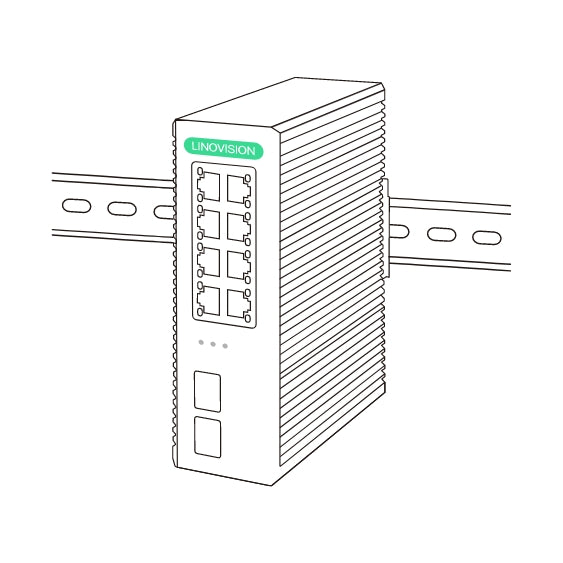
Their outdoor switches are housed in rugged, fanless aluminum castings rated at IP67. They are completely sealed against dust, rain, and snow, and function reliably in temperatures ranging from -40°F to 167°F (-40°C to 75°C).
Linovision vs. The Alternatives
How does Linovision stack up against other popular approaches in the off-grid market? Let's break down the three main alternatives.
| Solution | Pros | Cons | Verdict |
|---|---|---|---|
| Linovision | All-in-one integration, plug-and-play, wide temperature support. | Documentation is highly technical. | Best for rapid deployment & reliability. |
| Tycon Power | Industrial grade, high customization options. | Requires separate wiring, box assembly, and configuration. | Good for legacy systems, but slow to assemble. |
| Ubiquiti SunMax | Beautiful UI, integrates with UniFi controller. | Expensive, proprietary battery requirements, limited PoE output options. | Only recommended for pure Ubiquiti networks. |
| DIY Custom Build | Cheaper upfront cost for basic parts. | High rate of failure, messy wiring, no unified weatherproofing. | Too risky for professional setups. |
Real-World Use Cases
Scenario A: The Solar Surveillance Trailer
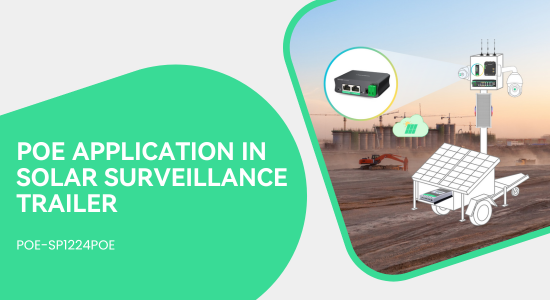
Modern shopping center parking lots and construction sites use mobile trailers to monitor for theft. These trailers require continuous power for 3-4 security cameras, a cellular modem, and a strobe light.
By using Linovision’s Go-Trailer power kit, installers mount a single weatherproof enclosure housing an MPPT switch, connect the batteries, and plug in the cameras. The system runs 24/7/365, charging during the day and running off batteries at night, without requiring a single generator.
Scenario B: Farm & Ranch Monitoring
Farms often need cameras at remote gates or water tanks miles away from the main house.
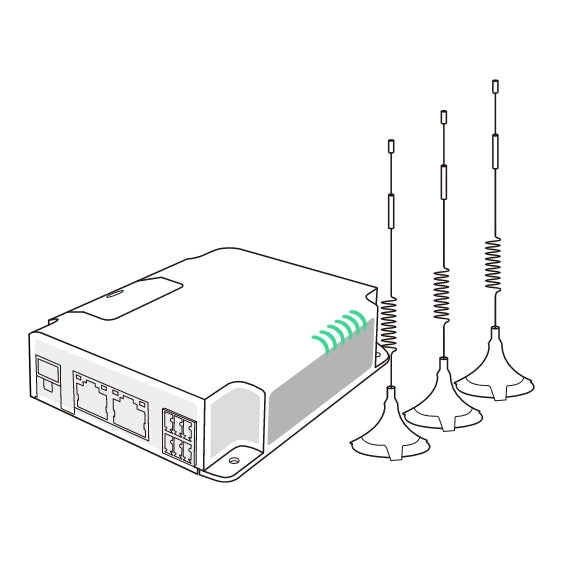
Using the Go-Solo Solar Wireless Bridge Kit, you can set up a solar-powered camera at the gate, connect it to a Linovision wireless bridge, and beam the video signal up to 3 miles back to the main house. This avoids the tens of thousands of dollars it would cost to dig trenches and lay fiber optic cables.
Scenario C: Temporary Event Security
Outdoor concerts and sports events require temp cameras on light poles. Since light poles only have power when the streetlights are turned on at night, these cameras go offline during the day.
A Linovision battery-backup switch mounts to the pole, charging when the lights are on at night, and running the cameras on battery power during the day.
Detailed Review of Top Essentials
1. Gigabit PoE Extender (POE-EXT02G)
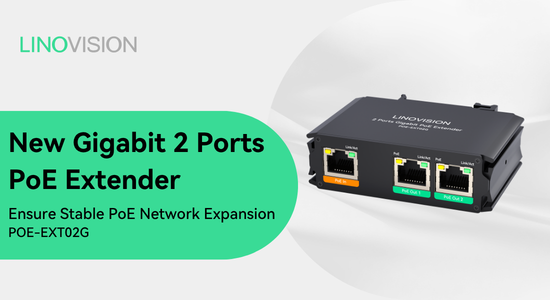
If you have a single Ethernet run but need to hook up both a security camera and a wireless access point, you would normally have to run a second cable. The POE-EXT02G allows you to split that single run into two PoE ports. Best of all, it is powered by the incoming PoE cable itself, meaning it doesn't need to be plugged into a wall outlet.
2. 4-Port MPPT Solar PoE Switch
This unit combines an MPPT solar controller and a gigabit PoE switch into a single metal box. It supports both 12V and 24V solar panels and batteries, and features programmable battery protection thresholds to prevent over-discharging during winter storms.
Off-Grid Power Budget Calculator
When sizing an off-grid system, the main pitfall is underestimating the power consumed by your devices. Below is a guide to sizing your solar panels and battery banks based on your device load.
| Device Setup | Total Load (Watts) | Daily Power (Watt-Hours) | Recommended Battery (12V) | Recommended Solar Panel |
|---|---|---|---|---|
| 1x Fixed IP Camera + Switch | 7W | 168 Wh | 50 Ah LiFePO4 | 100W Panel |
| 2x Cameras + Wireless Bridge | 18W | 432 Wh | 100 Ah LiFePO4 | 200W Panel |
| 1x PTZ Dome Camera + 4G Router | 35W | 840 Wh | 200 Ah LiFePO4 | 300W Panel |
Video Setup Guide
For a complete visual walkthrough on how to connect a solar panel, battery, and IP camera to a Linovision solar switch, check out this excellent community guide:
The Verdict
If you are building off-grid monitoring systems or managing networking hardware in harsh environments, Linovision is a reliable choice. Their specialized switches and solar kits take the complexity out of remote power and networking, allowing you to focus on the deployment rather than basic power troubleshooting.